Lesson scripts
Example sentences and short dialogues, the use our note names. One line per sentence, one caption per line.
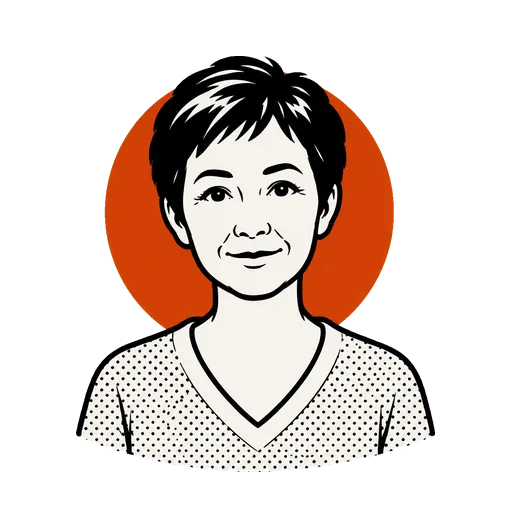
Nanami has the smallest record on the Japanese list: under ten minutes of training audio, a reading of ねずみの嫁入り, The Mouse's Wedding, in Kusuyama Masao's telling. That is why she is a C- with a B target quality. Our note gives her short lesson scripts, which is the length her record suggests.
Hear it
On the record
The published list marks her training duration with a warning: minutes, and few of them. The grade follows. It says nothing about the sound, and the samples are the only way to judge that, but it is a reason to keep scripts short.
Short lesson scripts are single sentences a learner repeats, read once and clearly. The speed slider goes down to half speed with the pitch unchanged, and the sentence-level subtitles double as the script to read along with.
Length the engine likes. The published guidance puts the sweet spot at roughly 100 to 200 tokens, a few sentences; very short lines are the weak spot and very long ones can rush.
Where we would use it
Example sentences and short dialogues, the use our note names. One line per sentence, one caption per line.
Set the speed to 0.5 for shadowing; the pitch stays where it is and the subtitles still line up.
Give a rare reading with the Pronounce as tag so the learner hears the kana you intend.
Blends
No recipe we kept includes Nanami. Each card is a pairing to try; she reads every character and the second voice lends its timbre.

A pairing to try, two Japanese voices. Sakura has hours of training audio; listen for whether 60 percent of her steadies a short-record voice.
60% Sakura

A pairing to try. Nora is our lesson-introduction voice in English; listen for a teaching timbre on Japanese.
50% Nora
A pairing to try. Imogen carries a courseware note and the top British grade; listen for a courseware timbre on a lesson line.
60% Imogen
A pairing to try, two Japanese voices with teaching notes: Michiko reads instructional videos by our note.
50% Michiko
A fixed sample at this mix, rendered once and cached. No credits used.
Every blend works the same way: the first voice sets the pronunciation and pacing, the second voice lends only its timbre, and you choose the ratio between 10 and 90 percent. See the three steps on the voice library page
At a glance
| Language | Japanese |
|---|---|
| Voice | Female |
| Overall grade | C- |
| Target quality | B |
| Training audio | Under 10 minutes |
| Captions | Sentence-level captions |
| Cost | 1 credit per job, room for about 3,300 characters |
| Formats | MP3 free, WAV on paid plans |
| Commercial use | Included on every plan |
| Preview | Free, no sign-up |
Grade, target quality, and training audio come from the engine's published voice list and estimate training data, not how a voice sounds.
FAQ
Under ten minutes of training audio, the smallest amount on the Japanese list. The grade measures that, not how she sounds.
Yes, to half speed with the pitch unchanged. Sentence-level subtitles come with every job, so the text is there to read along.
Wrap the word in the Pronounce as tag and type the kana. The kanji stays in the subtitles; the voice reads your kana.
Only what she was trained on: a reading of the folk tale as told by Kusuyama Masao. It is a fact from the published list, not a description of her tone.
Similar voices
Paste a script, keep Nanami or blend a second voice, and download the MP3 with subtitles.